
How to Store & Pack Jewellery: The Complete Guide
Posted on: 02/07/2026
The way you look after your jewellery between wears makes all the difference to how long it lasts and how good it looks. Yet storage is often an afterthought, which is how necklaces end up in hopeless knots, silver turns dull, and a favourite pair of studs loses its back at the bottom of a drawer.
The good news is that keeping your jewellery in great
condition is simple once you know a few basic principles. In this guide, we
will walk through how to store jewellery at home to prevent tangling,
tarnishing, and damage. Plus, our tips on how to organise different pieces and
how to pack everything safely when you travel or move house. We will cover:
•
Why proper jewellery storage
matters
•
How to store jewellery at
home
•
How to store necklaces
without tangling
•
How to store earrings, rings
and bracelets
•
How to store gold, silver and
pearls
•
How to pack jewellery for
travel
•
How to pack jewellery for a
house move
• Quick reference: storage by jewellery type
Why proper jewellery storage matters
Good storage protects your jewellery from three common problems:
● Tangling: The most familiar frustration,
particularly with fine chains, which can knot so tightly they are almost
impossible to separate.
● Tarnishing: A chemical reaction that happens
when metals like silver react with moisture and sulphur in the air, causing
them to gradually darken.
● Physical damage: When pieces are stored loose
and allowed to knock against one another, it can cause damage such as
scratches, chips, and bent settings. Harder stones like diamonds can easily
scratch softer ones, and softer metals mark easily.
A little organisation prevents all three. Storing pieces separately, keeping them dry, and giving softer items a cushioned home will keep your collection looking its best for years.
How to store jewellery at home
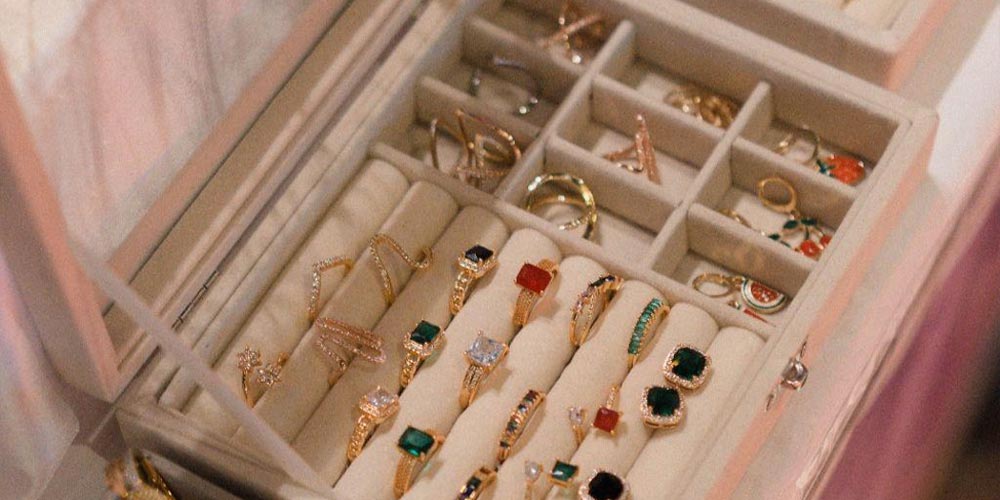
The ideal home for your jewellery is somewhere cool, dry, and dark, with separate compartments so that pieces are not piled together. A lined jewellery box is the classic choice for good reason: the soft lining protects against scratches, while compartments, hooks, and ring rolls keep everything in its place.
Whatever you use, a few principles apply across the board:
•
Keep pieces separate. Give
each item its own compartment, pouch, or hook
so nothing rubs together or tangles.
•
Keep it dry. Damp speeds up
tarnishing, so avoid bathrooms and other humid spots. A silica gel sachet
tucked into a drawer or box helps absorb moisture.
•
Keep it out of direct
sunlight. Prolonged sun can fade certain gemstones and degrade some materials
over time.
•
Fasten clasps and hooks.
Doing up a necklace clasp or earring hook stops it from catching on other pieces.
•
Store away from heat.
Radiators and sunny windowsills can damage delicate stones and dry out organic
gems like pearls.
If you would rather keep things on display, a stand or a hanging organiser works well for everyday pieces, just bear in mind that open displays expose jewellery to more dust and air, so they suit hard-wearing items better than your finest treasures.
How to store necklaces without tangling
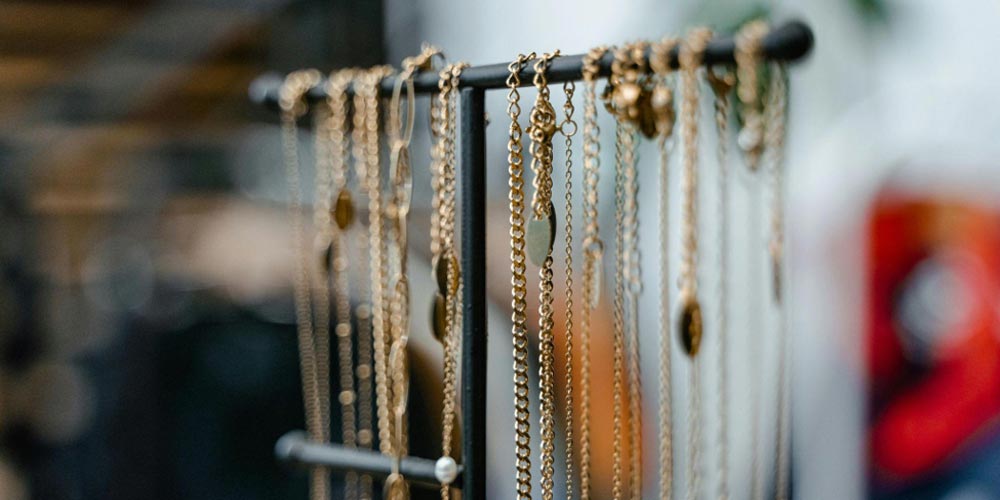
Necklaces and chains are the most tangle-prone of all jewellery, and fine chains are the worst offenders. The trick is to stop them from moving against each other and to keep them gently held in shape.
Hanging them individually on hooks, either on a wall
organiser or stand, will keep each necklace straight
and separate, which is the single most effective way to prevent tangling. If you'd
prefer to store your jewellery out of sight, choose a jewellery box with
built-in hooks designed specifically for necklaces. Make
sure to fasten the clasps to stop each necklace from threading itself
through another chain.
Alternatively, if hanging is not an option, lay each
necklace flat in its own section of a box or tray so it cannot shift. You can
also try the straw trick for very fine chains. Just thread the open chain
through a drinking straw before fastening the clasp. This keeps the chain
straight and knot-free.
For very long necklaces, either hang them from a higher hook
so they do not pool at the bottom, or fold them once and lay them flat in a
longer compartment. Avoid coiling them tightly, as this can put a permanent
kink in the chain.
How to store earrings
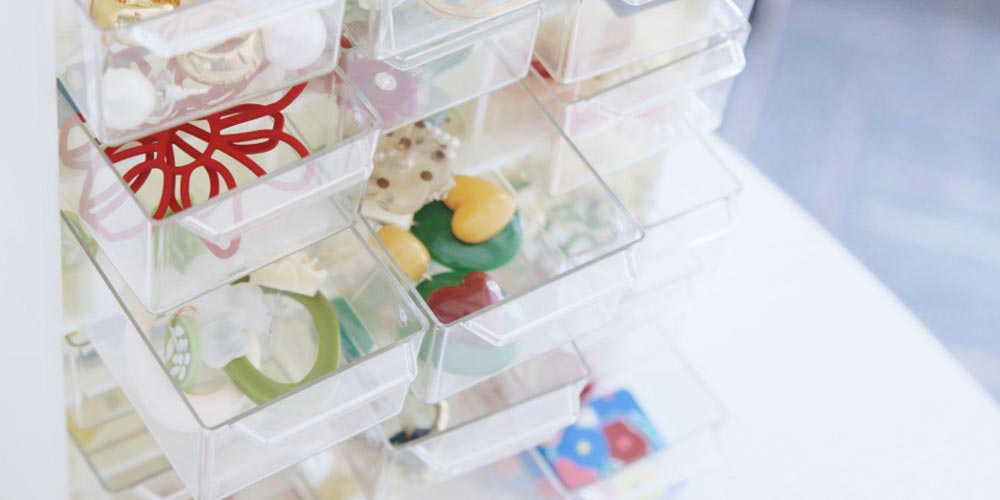
The challenge with earrings is keeping pairs together and stopping small backs from going astray. Different styles call for slightly different approaches.
Storing stud earrings
Studs are small and easily lost, so they need compartments.
A box with small divided sections keeps pairs together, while a clever DIY
option is an ice-cube tray or a pill organiser, which gives each pair its own
little well. You can also push studs through a piece of card or foam to keep
them paired and upright. Always store the backs with their studs so they do not
get lost.
Storing hoop and drop earrings
Larger hoops and drops are more prone to bending and
scratching. Hang them from a dedicated earring stand or a slotted holder so
they keep their shape, or lay them flat in a soft-lined compartment. Keep them
clear of harder pieces that could scratch the surface.
How to store rings
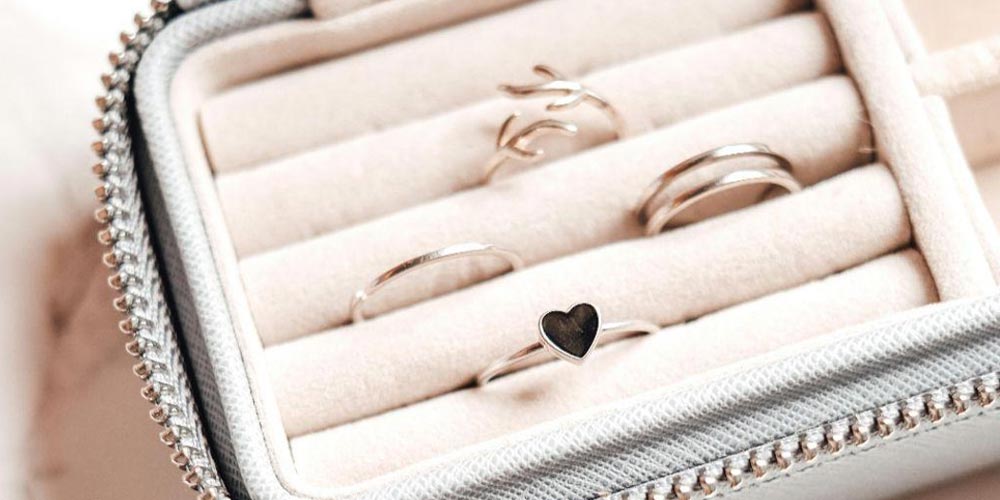
Loose rings knock together easily, and a harder
stone, such as a diamond, can scratch softer metals and gems. A ring roll, with
its padded slots, is the ideal home, keeping each ring cushioned and separate.
A small ring dish is fine for short-term use, for instance beside the sink when
you take rings off to wash up, but it is not the place for long-term storage.
If you have a diamond ring or other precious ring you only
wear occasionally, store it in its original box or an individual padded pouch,
well away from other pieces.
How to store bracelets and bangles
Like necklaces, bracelets and bangles can tangle and scratch
when stored together. A bangle bar, where bangles slot over an upright post,
keeps rigid pieces neatly stacked without rubbing. Chain bracelets are best
fastened and either laid flat in a compartment or kept in their own pouch, just
as you would a necklace. Keep charm bracelets separate so the charms do not
catch on other items.
How to store gold, silver & pearls
Different materials have slightly different needs. Storing them correctly is the best way to prevent tarnish and keep them looking their best.
Storing gold jewellery
Pure gold does not tarnish, but most gold jewellery is an alloy mixed with other
metals, which can react over time, particularly lower-carat gold. Store gold
pieces separately in a soft-lined compartment or pouch, away from harder items
that might scratch them, and keep them dry. To learn more about why this
happens, see our guide on whether gold tarnishes, which also includes
tips for cleaning gold jewellery if it does tarnish.
Storing silver jewellery
Silver is the most tarnish-prone of the common metals,
reacting with moisture and sulphur in the air to darken over time. To slow this
down, store silver jewellery in an airtight bag or a lined
box when not being worn. Adding an anti-tarnish strip helps to absorb the
compounds that cause discolouration. A small piece of chalk or a silica gel
sachet stored alongside helps keep the air dry.
Storing pearls and soft stones
Pearls are organic and surprisingly delicate. They scratch
easily and can dry out if kept somewhere too warm or airless. Store pearl jewellery in a soft pouch, separate from
harder jewellery, and lay strands flat rather than hanging them, as hanging can
stretch the silk thread over time.
Pearls actually benefit from contact with your skin, so
wearing them now and then helps keep them lustrous. Other softer or more
delicate stones, such as opals and emeralds, also appreciate a cushioned,
separate home.
How to pack jewellery for travel
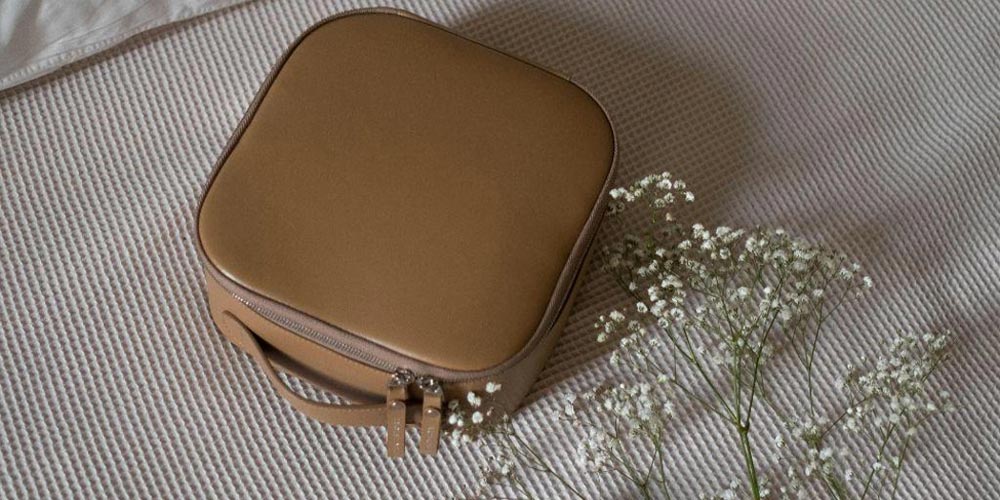
•
Thread necklaces and chains
through a straw or fasten them into individual resealable bags to stop them from
tangling in transit.
•
Use a pill organiser or small
bags for studs and rings, keeping pairs and sets together.
•
Wrap delicate or precious
pieces in a soft cloth or tissue for an extra layer of padding.
•
Keep button-style backs and
small parts in a sealed bag so nothing escapes.
When flying, always pack valuable jewellery in your hand
luggage rather than your checked case, and consider wearing your most precious
items instead. If you are travelling with an engagement
ring or another valuable piece you would rather not wear, keep it in
its padded box within your carry-on, and check that it is covered by your
travel or home insurance before you go.
How to pack jewellery for a house move
A house move adds a few extra challenges: boxes get jostled,
things go missing, and valuables can be a target. The principles are similar to
packing for travel, but with a stronger focus on security and clear labelling.
•
Keep valuables with you. Pack
your most precious and sentimental pieces in a small bag or case that travels
with you personally, never in the removal van.
•
Protect against tangling and
scratching. Use the same straw, pouch, and resealable-bag tricks to keep pieces
separate and knot-free.
•
Use a hard case for the
journey. A sturdy, padded box protects against knocks far better than a soft
bag when things are being moved around.
•
Make an inventory. Photograph
your jewellery and note anything valuable before the move, both for peace of
mind and for insurance purposes.
•
Avoid labelling boxes
obviously. If jewellery must go in the van, do not write “jewellery” or
“valuables” on the outside.
Once you have arrived, unpack your jewellery promptly and
return it to proper storage rather than leaving it sitting in packing
materials, where it can be forgotten or damaged.
Storing and packing your jewellery well does not need to
be complicated. Keep pieces separate, dry and cushioned, fasten your clasps,
and give silver and pearls a little extra care, and your collection will stay
tangle-free, bright, and beautiful for years to come.
Ready to give your jewellery a
proper home? Explore our range of jewellery boxes and cases, or browse
our full collection of jewellery, all at least 30% off the
RRP.
Looking for more advice? Our care guides cover everything from caring for your jewellery to whether gold tarnishes and keeping your rings clean.