
Necklace Length Chart & Guide: Find Your Fit
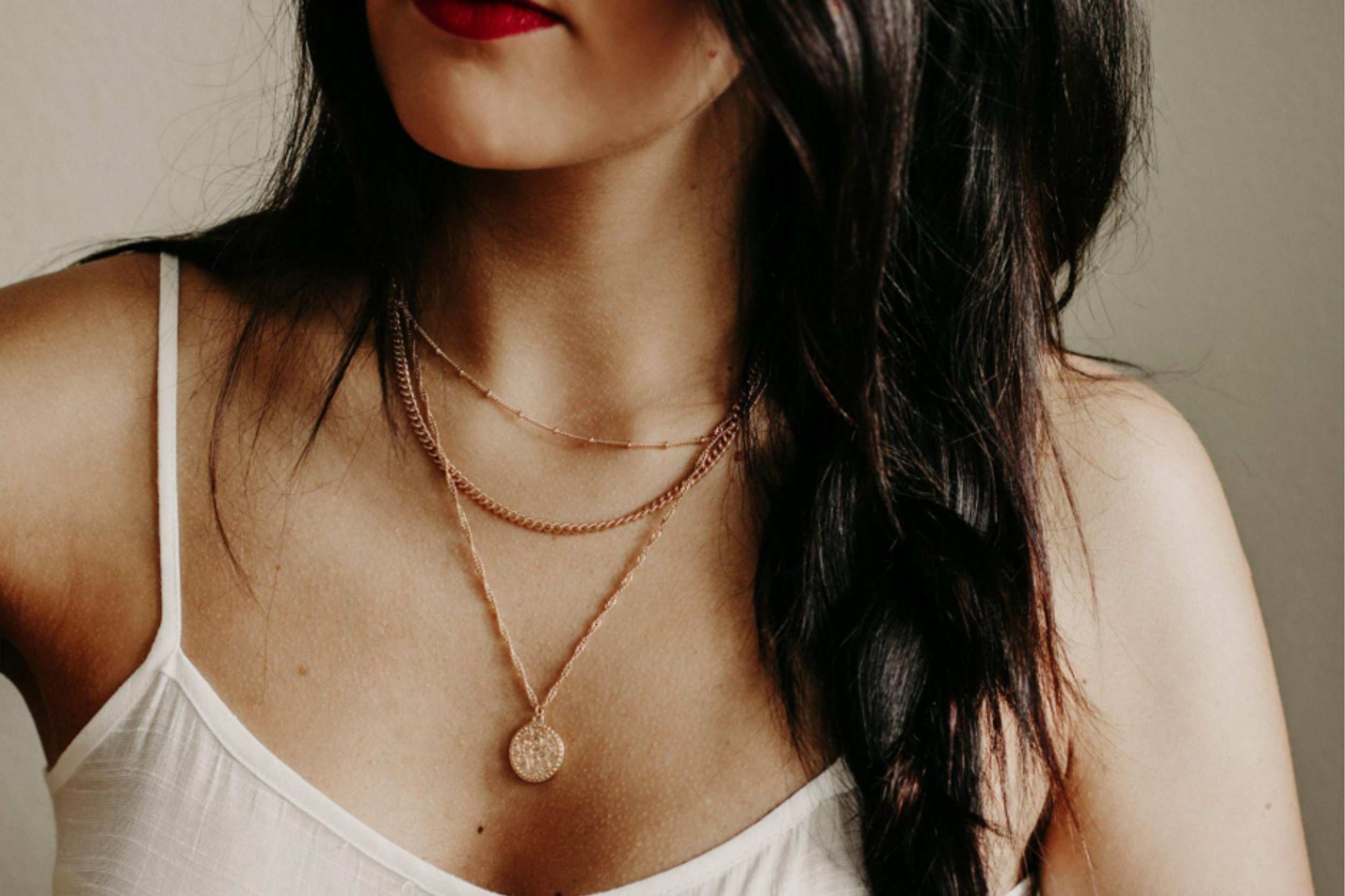
The right necklace can transform an outfit, but get the length wrong and even the most beautiful pendant can feel a little off.
Whether you’re buying for yourself, picking out a gift for someone special, or shopping for your first piece of fine jewellery, knowing your way around necklace lengths makes all the difference.
In this guide, we’ll walk you through the standard necklace lengths for women and men, explain where each sits, and show you how to measure so you can buy with confidence. We’ll cover:
- Standard necklace lengths explained
- Necklace length chart
- Women’s necklace lengths
- Men’s necklace and chain lengths
- How to measure necklace length
- How to choose the right necklace length
- Necklace length FAQs
Standard necklace lengths explained
Necklace lengths in the UK are usually measured in inches, though you’ll often see centimetres listed alongside, particularly on European brands.
The most common women’s necklace length is the princess (17–19 inches/43–48 cm), while for men, the 20-inch chain (50 cm) is the go-to. These are the lengths you’ll find most necklaces and chains supplied as standard, as they're perfect for everyday. If you’re buying your first pendant necklace or gifting a piece of birthstone jewellery, princess is a safe and stylish choice.
Although these are the standard lengths, they're not the only lengths that necklaces and chains come in. The best length for you depends on your neckline, your frame, and what you’re planning to wear the piece with. The names you’ll see, collar, choker, princess, matinee, opera, and rope, are traditional terms borrowed from classical pearl necklace sizing, and they still shape how most jewellers describe necklace lengths today.
Necklace length chart
Women's necklace lengths
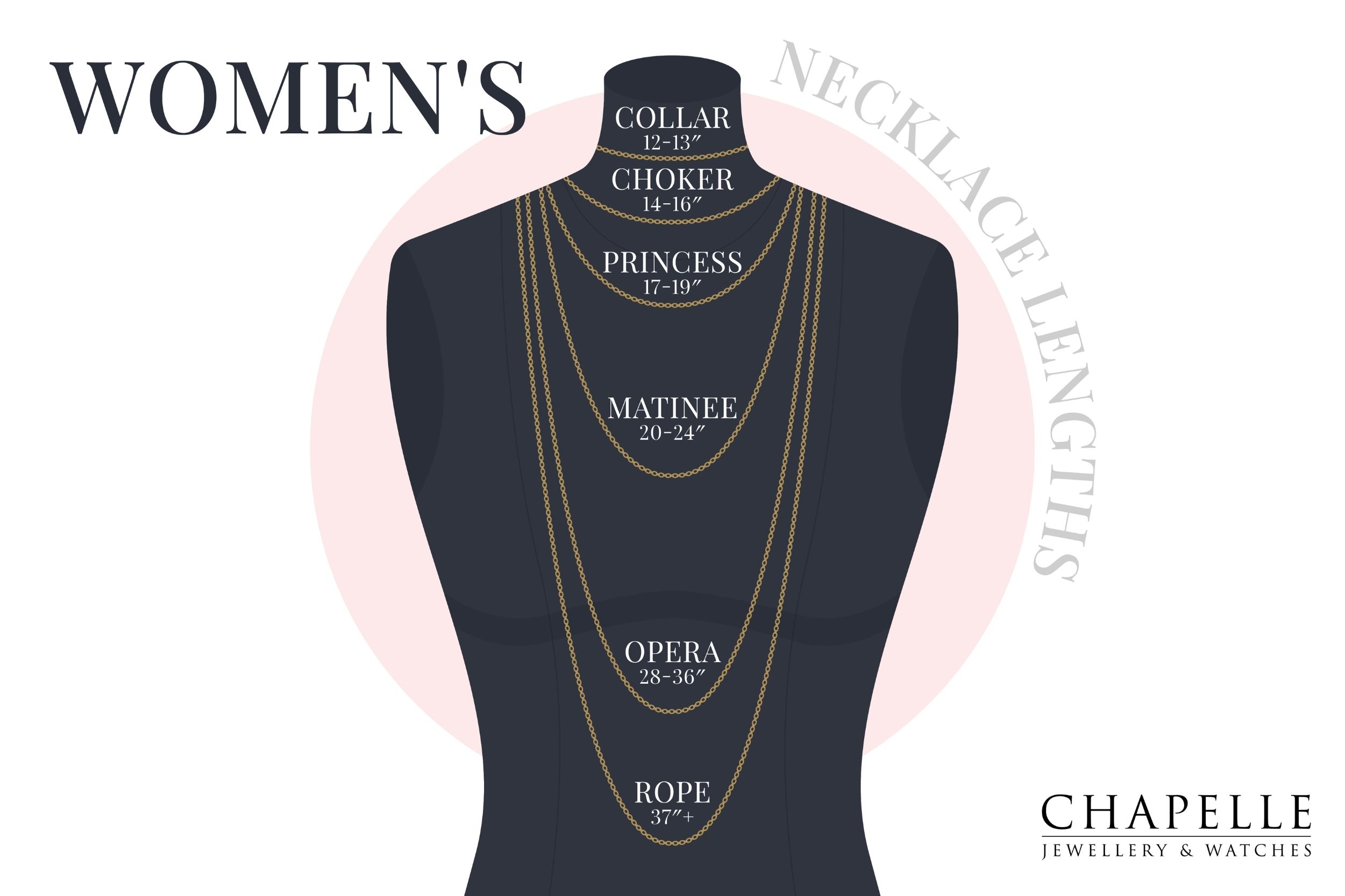
Our necklace length chart covers the six traditional styles, from the snug collar to the dramatic rope, in both inches and centimetres. The ‘right’ necklace length depends on how you like to wear your jewellery, the neckline you’re wearing it with, and your personal style.
| Style | Length (inches) | Length (cm) | Where it sits | Best suited to |
|---|---|---|---|---|
| Collar | 12–13" | 30–33 cm | Snug around the middle of the neck. | Off-the-shoulder, boat, and scoop necklines; dressing up a statement outfit. |
| Choker | 14–16" | 35–41 cm | At the base of the neck, just above the collarbone. | Crew, V-neck, and square necklines; everyday wear and layering. |
| Princess | 17–19" | 43–48 cm | Just below the collarbone. | The most versatile length, works with almost any neckline, ideal for pendants. |
| Matinee | 20–24" | 50–60 cm | Between the collarbone and the bust. | Higher necklines like crew or turtleneck; polished, business-smart looks. Particularly striking with a single pendant or a string of pearls. |
| Opera | 28–36" | 70–90 cm | Around or just below the bust. | Dresses, eveningwear. Can be doubled up to create a layered look. |
| Rope | 37"+ | 90 cm+ | Below the bust, sometimes to the waist. | Statement pieces, often worn as long single strands, tied in a loose knot, or wrapped multiple times for a layered effect. |
A quick rule of thumb: add around 2–5 cm to your chosen length if you’re wearing a heavy or bulky pendant, as the weight will pull the necklace down slightly. Adjustable clasps and extender chains can give you 2–5 cm of flexibility on either side of a standard length, which is useful if you fall between sizes.
Men’s necklace and chain lengths
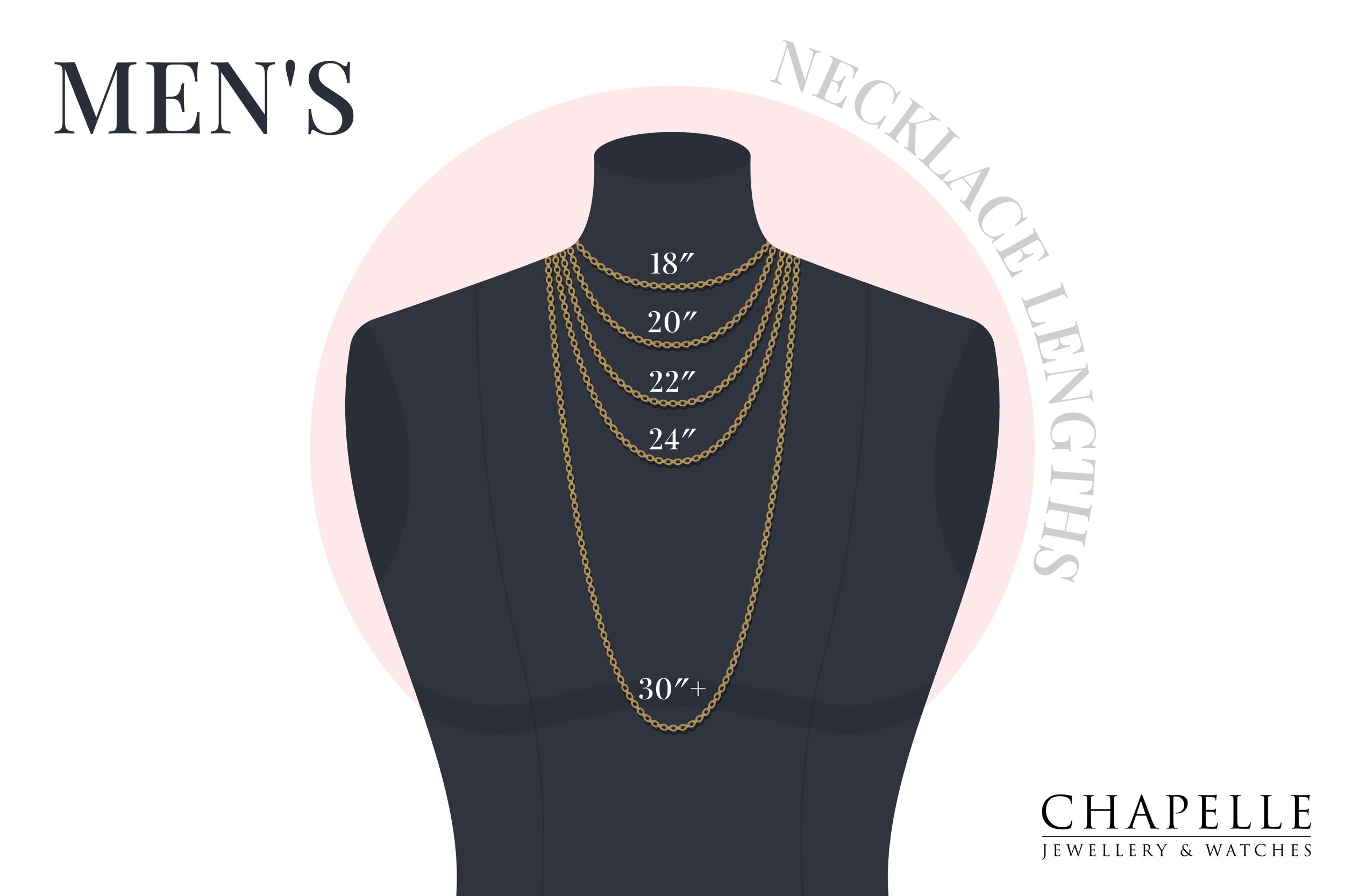
Men’s chains are typically longer than women’s, sitting lower on the chest to balance broader shoulders and larger frames. The most popular men’s chain length is 20 inches (50 cm), which sits neatly on the collarbone and works with almost every shirt and T-shirt in a typical wardrobe. But as with women’s necklaces, the best length depends on your build, your style, and how you want the chain to sit.
| Length (inches) | Length (cm) | Where it sits | Best suited to |
|---|---|---|---|
| 18" | 45 cm | High on the neck, near the base of the throat | Smaller frames. Visible above most collars. |
| 20" | 50 cm | On or just above the collarbone | The most popular men’s length. Sits neatly under or over a crew-neck T-shirt. |
| 22" | 55 cm | Just below the collarbone | Great for layering or pairing with an open-collared shirt. |
| 24" | 60 cm | Top of the sternum | Larger frames. Highly visible over shirts and tees. |
| 30"+ | 75 cm+ | Mid-chest or lower | Statement chains and layered looks. |
Choosing a men’s chain length by frame
Frame size is the single biggest factor when choosing a men’s chain length. As a guide:
- Smaller or slimmer frames: 18–20 inches is typically the most flattering as longer chains can look oversized.
- Average frames: 20–22 inches hits the sweet spot, sitting neatly on or just below the collarbone.
- Larger or broader frames: 22–24 inches will sit in proportion without looking too short.
Chain style and thickness
Thicker chains, like curb, rope, or Figaro, tend to look best at 20 inches or longer, where there’s enough length to show off the link pattern. Finer chains can work well at shorter lengths, particularly if they’re paired with a pendant. Religious pendants such as crosses are traditionally worn on a 20- or 22-inch chain, so they sit comfortably on the chest rather than at the throat.
How to measure necklace length
If you want to know exactly where a necklace will sit before you buy, it’s worth taking a quick measurement. You’ll need a flexible tape measure, or a piece of string or ribbon and a ruler. Here’s how:
With a tape measure:
- Wrap a flexible tape measure loosely around your neck, positioning it where you’d like the necklace to sit.
- Pinch the spot where the two ends of the tape meet and take the measurement. Double-check in both inches and centimetres so you have a reference when you’re shopping.
- Compare your measurement to the necklace length chart above to find the closest standard length.
With string:
If you don't have a flexible tape measure to hand, you can use a piece of string or ribbon instead:
- Drape the string around your neck so it sits where you'd like the chain to sit.
- Mark the string where the two ends meet.
- Remove the string, then lay it flat and measure with a tape measure or ruler.
Measure a necklace you already own
If there’s a necklace in your jewellery box that sits exactly where you like, you already have a shortcut. Lay it flat in a straight line (without the clasp fastened) and measure from one end of the clasp to the other.
Measuring for a gift
Buying a necklace as a gift makes measuring a little trickier, but not impossible. Take a discreet look at necklaces they already wear often and where they tend to sit. If in doubt, a princess-length (17–19 inches) necklace for women or a 20-inch chain for men is the safest choice. Look for adjustable designs or pieces with an extender chain, which give a couple of extra centimetres of flexibility.
Factor in the pendant size
A heavier pendant will pull a chain down by a centimetre or two, which matters if you’re already at the shorter end of a length range. If you’re buying a chain to pair with an existing pendant, or a charm to add to a chain you already own, test the weight before committing. Chapelle’s diamond necklaces and pendant pieces are supplied on chains chosen to suit the weight and style of the stone.
Think about layering
If you love the layered look, the easiest way to get it right is to pick necklaces at least 2–5 cm apart in length. A choker (14 inches) paired with a princess (18 inches) and a matinee (22 inches) gives you three clean tiers that won’t tangle. Mixing metals - yellow gold, rose gold, and white gold, is very much on-trend and allows you to wear different pieces together without matching exactly.
The right necklace length makes a real difference, it frames your outfit, flatters your shape, and shows off your jewellery at its best. Whether you’re shopping for yourself or picking out a gift, we hope this guide makes your decision a little easier. Browse our full collection of necklaces and chains at Chapelle, with pieces for women, men, and children, all with at least 30% off the RRP and a 30-day guarantee.
Looking for more advice? Explore our other buying guides and care guides, including our ring size guide, complete guide to earring types, and birthstones by month.