
A guide to engagement ring styles
Posted on: 02/12/2025
The key to the perfect proposal? The perfect engagement ring. But with so many styles to choose from, it can be difficult to narrow it down and find the right choice for your significant other. That’s where our engagement ring guide comes in.
Here, we’ll take a look at a wide selection of engagement ring styles, covering different band styles, settings, gemstones, and engagement ring cuts to help you find exactly what you’re looking for. And if you’re still struggling to narrow things down, we’ll also cover some top tips on how to pick an engagement ring.
- Engagement ring band styles
- Engagement ring settings
- Engagement ring shapes
- Engagement ring gemstones
- How to choose an engagement ring
Engagement ring band styles
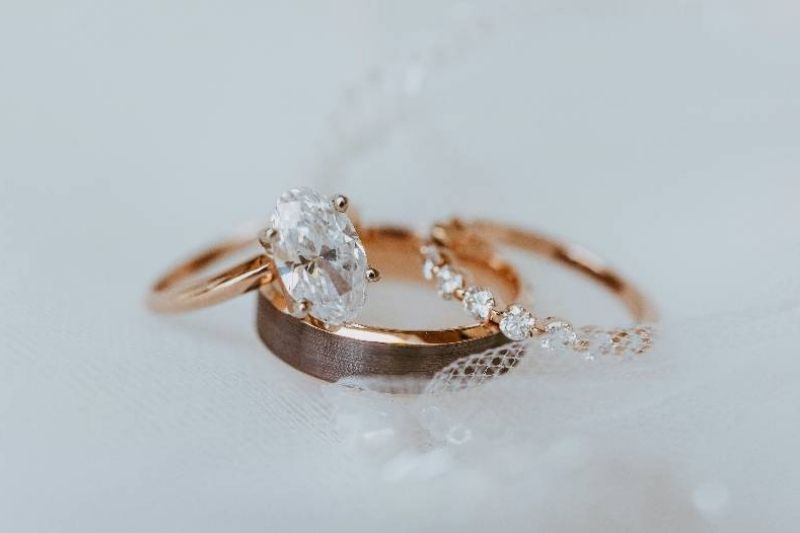
The gemstone may be what catches your eye first, but the band is actually one of the most important style choices you can make. Not only can it completely transform the look of the ring, but it has a big impact on comfort and everyday wearability, too. Here are some of the most popular styles of engagement ring bands.
Straight band
A timeless choice and popular for a reason, a straight
engagement ring band is symmetrical and even in width all the way round. It’s a
classic: clean, simple, and the perfect band to let the setting and gemstone
shine. Its simplicity makes it a popular choice for those who want to get an
engraving on their ring. Chosen by minimalists and traditionalists alike, the
straight band pairs effortlessly with almost any engagement ring style.
Rounded band
Looking to prioritise your spouse-to-be’s comfort? A rounded
band is the choice for you. It is similar to a straight band as it is uniform
all the way around, but it features smooth, softly curved edges (often called a
“comfort-fit” shape) for a gentle feel against the finger. Some people find
rounded bands spin around their fingers, but this shouldn’t be an issue if the
ring is the right size.
Tapered band
As the name suggests, a tapered band tapers down as the band
gets closer to the gemstone. The tapering can vary from subtle to more
pronounced, making this a versatile band style. This band shape draws the eye
toward the stone and can make the gem appear larger and more prominent. This
style looks particularly beautiful when paired with classic solitaire and vintage engagement ring
settings.
Split shank band
A truly distinctive silhouette, a split shank splits into
two or more strands near the centre stone. This creates elegant open spaces
that can be left plain for a minimalist look or accented with smaller diamonds
for added sparkle. Like with a tapered band, this can be minimal or more
elaborate, but either way, it is a truly unique style. Popular during the Art
Deco era of the 1930s, this style is often seen in vintage rings but remains a
striking choice for modern designs as well. This design pairs beautifully with
geometric stones and halo rings, but also adds drama to simple
solitaire settings.
Twisted band
In a twisted band, the band itself is split and then gracefully intertwined, creating a rope-like effect around the finger and adding texture to the ring. The two strands of the band intertwining can also represent two lives woven together, making it a romantic choice with meaningful symbolism. Whether delicate and subtle or bold and intricate, this style offers a beautifully unique alternative to a traditional straight band.
Other engagement ring band styles
The band styles above are the most popular choices, but there are plenty of other engagement ring band styles to choose from. Here are some other bands you may come across when ring shopping:
- Knife-edge band: Band with angled sides that meet at
a sharp ridge along the centre, creating a sleek, sculpted, and modern look.
- Flat band: Band with a flat top and edges, creating
clean, modern lines.
- Double/triple band: Parallel bands that hold one
setting.
- Crossover band: Bands that cross over one another
near the stone.
- Bypass band: On this band, the ends wrap around the
centre gem instead of meeting directly.
- Chevron/V-shaped band: Band with a point or V shape
at the centre.
- Hammered band: Band with a textured surface and small
indentations, giving the ring an artisanal, handcrafted appearance.
- Filigree band: Band with decorative scrollwork cutouts.
Engagement ring settings
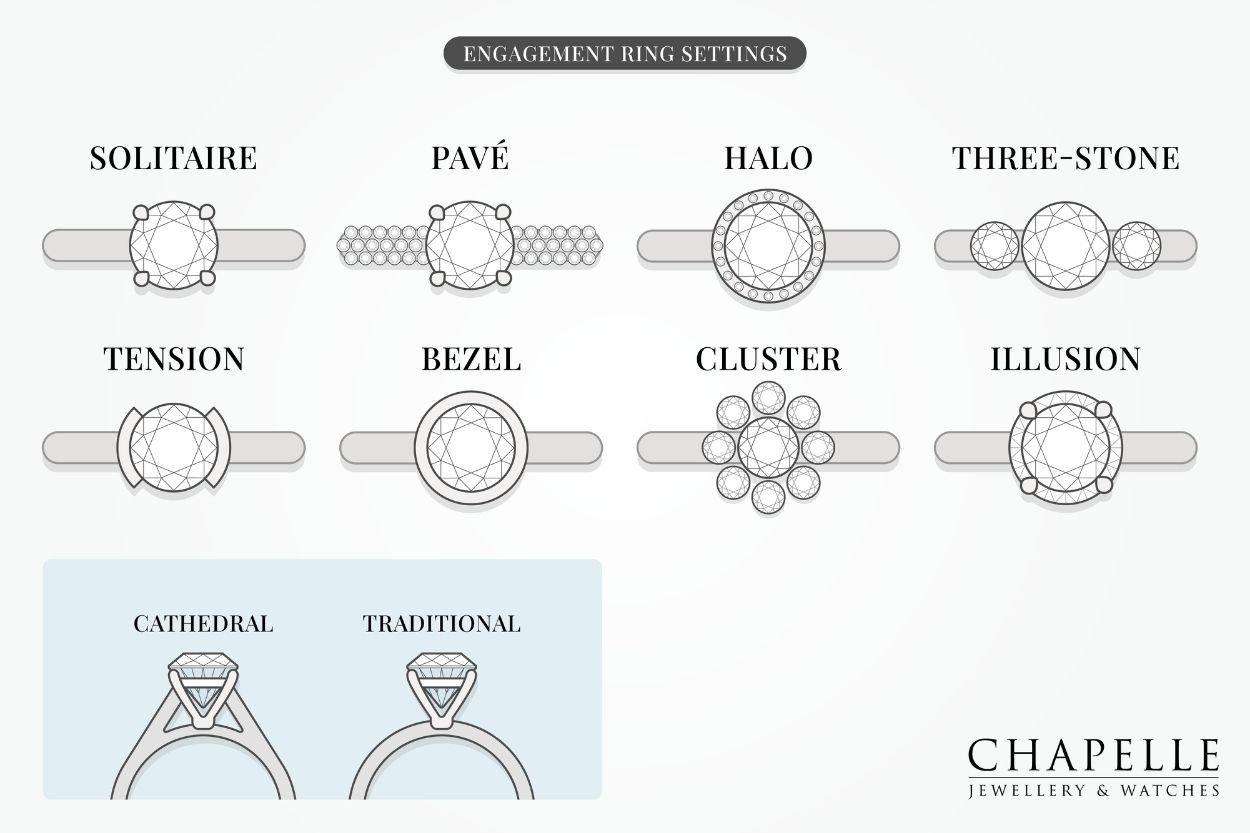
The engagement ring setting has the important job of holding the gemstone in place, but it is also a style element in itself. There are various styles to choose from, ranging from sleek and minimalist to bold and elaborate. Our engagement ring settings chart above shows some of the most common engagement ring settings. Below, we’ll go into more detail about each.
Solitaire
Simple, timeless, elegant: the solitaire is one of the most popular engagement ring settings for a reason. Sometimes known as a single-stone ring, a solitaire features one central stone, typically held by four or six prongs. If you have a truly dazzling gem, the solitaire setting lets it take centre stage, highlighting the beauty, size, and brilliance of the stone without distraction from side stones or elaborate detailing. Trends may come and go, but this classic choice remains in style.
Pavé
Can’t get enough diamonds?
The pavé is exactly what you need to capture as much sparkle and shine as
possible. In this setting, the band is paved with tiny diamonds. There are a
few different types of pavé settings:
- Standard pavé: Tiny diamonds are set close together,
with small metal beads holding each stone, creating a seamless, glittering
effect.
- Micro-pavé: Even smaller diamonds are set very close
together for a delicate, refined, and ultra-sparkly look.
- French pavé: Features tiny cutouts or grooves between
the stones, allowing more light to enter and making the diamonds appear to
float.
- Bead set pavé: Small beads of metal hold each diamond in place, offering a classic, handcrafted appearance.
Pavé bands pair beautifully with solitaire, halo, and three-stone rings, adding extra sparkle without overwhelming the centre gemstone.
Halo
If eye-catching is what you’re after, a halo engagement ring
setting is the choice for you. In this setting, the central stone (usually a
diamond, but sometimes an alternative gemstone) is fully surrounded by a “halo”
of smaller diamonds. This doesn’t just make the central stone look larger, but
it also enhances its shine and sparkle.
Halo rings have long been a
beloved choice, with two major surges in popularity: one in the 1980s and
another in the 2010s, when Princess Diana and Kate Middleton, the Princess of
Wales, famously wore this style. Perfectly versatile, halo settings can be
paired with pavé, tapered, or straight bands to create a dazzling engagement
ring that truly captures attention.
Three-stone
If you’re looking for something less dazzling than a pavé or
halo setting, but still want a touch of sparkle, a three-stone engagement ring is an excellent
choice. Also known as a trilogy ring, this design features one large central
stone flanked by a smaller stone on each side. Traditionally, it symbolises a
couple’s past, present, and future together, making it a truly romantic option.
The two flanking stones don’t have to be the same as the central stone. In
fact, colourful gemstones can be great at complementing a central diamond, or
vice versa.
Cathedral
With a cathedral engagement ring setting, you truly bring your beautiful gemstone to the forefront. The band arches upward to support the centre stone, similar to the arches of a cathedral. This style lifts the gemstone higher, making it appear larger and more prominent while adding a graceful flair. The raised design also allows more light to pass through the stone, enhancing its brilliance.
Other engagement ring settings
These aren’t the only engagement ring settings. If you’re
looking for something a little less common, here are some other engagement ring
settings you may want to consider:
- Illusion: The gemstone is set in a reflective metal
frame, which enhances the stone’s sparkle, making it appear larger and even
more dazzling.
- Bezel: The central stone is fully or partially
encircled by a metal rim, offering a sleek, modern look and maximum protection
for the stone.
- Tension: The gemstone is held in place by the
pressure of the band alone, giving the illusion that it is floating.
- Cluster: Multiple smaller stones are grouped to
create the appearance of a larger central stone or a unique, eye-catching
design.
Engagement ring shapes
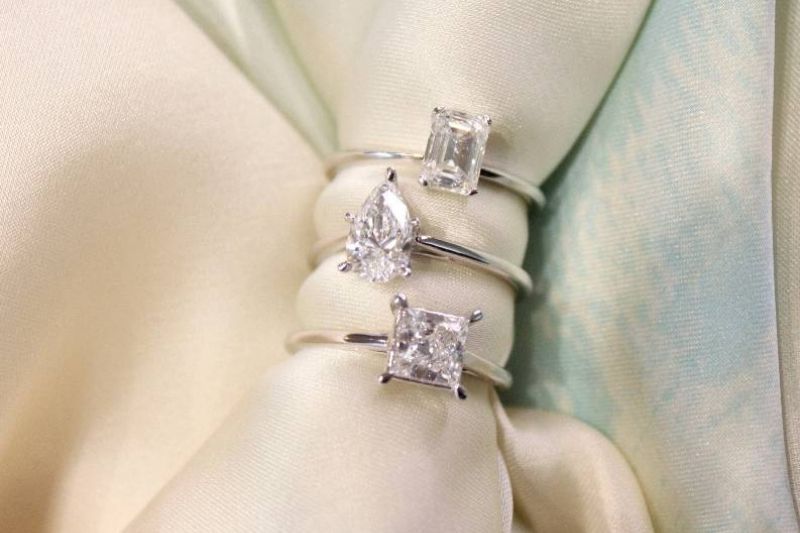
Choosing the shape (also known as the engagement ring cut) of your engagement ring’s central stone is one of the most important decisions. It doesn’t just influence sparkle and shine, but the overall look and style of the ring. Each shape has its own personality, so it’s important to find out which one suits your partner's style best. Here are some of the most popular engagement ring shapes:
- Round: One of the most classic choices, a round engagement ring is a popular, versatile
option, and a great choice for maximising sparkle.
- Oval: Elegant and elongated, the oval shape makes the finger appear longer and
can give the illusion of a larger stone. It is a popular choice for halo
settings.
- Princess: The princess cut, also known as the square cut,
combines geometric lines with brilliant sparkle. It’s a modern, versatile
choice for solitaire and cathedral settings.
- Emerald: A rectangular gem with trimmed corners, an emerald cut engagement ring emphasises clarity
and elegance over sparkle. Its clean lines give a sophisticated, vintage feel.
- Cushion: Sometimes called a “pillow-cut,” the cushion
has rounded corners and larger facets, giving it a soft, romantic glow. It’s
often used in vintage-inspired or halo designs.
- Marquise: A rugby ball-shaped gem with pointed ends,
the marquise maximises carat weight and elongates the finger, creating a
dramatic, eye-catching look.
- Pear: Also known as a teardrop, the pear shape
combines round and marquise cuts, elongating the finger and creating a truly
unique silhouette.
- Asscher: A square step-cut with cropped corners, the
Asscher offers an Art Deco vintage style. Its deep facets produce a
hall-of-mirrors effect for a fantastic sparkle.
- Baguette: A long, narrow rectangular cut, baguette diamonds are often used as side stones. They add elegance and structure without overshadowing the centre stone.
To find out more about different diamond cuts, check out our informative guide.
Engagement ring gemstones
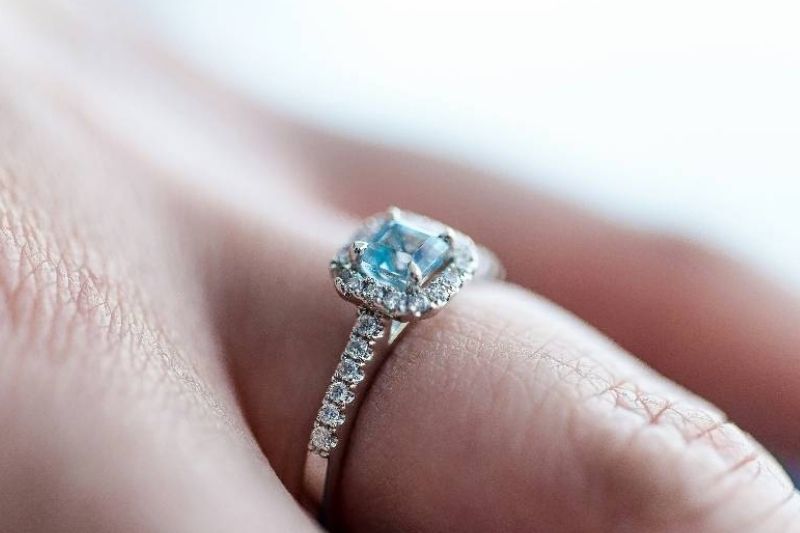
When thinking of popping the question, your mind may go straight to diamond rings. This is understandable: they are dazzling, truly beautiful, and the most durable stone around (the hardest on the Mohs scale, in fact). However, diamonds have not always been the go-to choice for engagement rings. It was an ad campaign by diamond producer De Beers in the 1930s that popularised diamond engagement rings. Before that, a range of gemstones were used.
Diamond engagement rings may still reign supreme, but
colourful gemstones are becoming increasingly popular. They can be great when
it comes to incorporating more of your partner’s personality into their ring.
Here are some of the most popular diamond alternatives for engagement rings:
- Sapphire: Traditionally deep blue, sapphires are durable and symbolic of loyalty.
They also come in pink, yellow, and other colours.
- Emerald: Famous for its rich green hue, the emerald offers a striking and timeless look,
perfect for a bold and elegant engagement ring.
- Ruby: Vibrant red and highly durable, rubies are often associated with passion and
love. They make bold, timeless centre stones.
- Aquamarine: Pale blue and calming, aquamarine offers a serene, elegant look that
is perfect for ocean lovers.
- Amethyst: Purple in colour and widely available, amethyst is a unique, budget-friendly option
that adds a splash of personality.
- Topaz: Available in a range of colours, including
golden and blue, topaz is durable and eye-catching for
distinctive engagement rings.
- Tanzanite: Rare and striking, tanzanite offers a deep blue to violet hue,
ideal for those seeking a truly unique gemstone.
- Garnet: Typically red but available in other shades, garnet is durable and provides a bold,
vintage-inspired aesthetic.
Want to make sure you choose a stone that is truly special to you both? Make sure to give our gemstone meanings guide a read.
How to choose an engagement ring
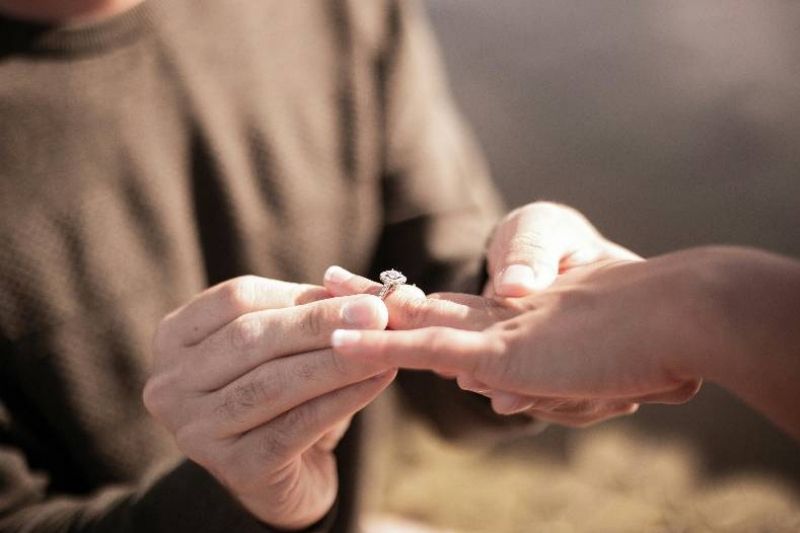
You now know about a huge range of engagement ring styles,
so you should feel more confident when it comes to ring shopping. But before
you start browsing, here are a few extra tips on choosing an engagement ring
for your partner.
Jewellery style
Think about your partner’s personal style and the jewellery
they wear every day. Do they gravitate towards minimal, understated pieces or
bold, statement-making designs? Do they love vintage charm, sleek modern lines,
or timeless classics? Pay attention to the metal colours they wear most,
whether this is gold, silver, platinum, or rose gold. Some people don’t mind mixing
jewellery metals, but others prefer to stick to wearing just one, so make sure
to bear this in mind.
Budget
There’s no rule about how much you “should” spend on an engagement ring. What matters most is choosing something meaningful and affordable for you. Set a realistic budget before you start shopping to help narrow down your choices, and remember that beautiful rings exist at every price point. Prioritise what matters most, whether that’s gemstone size, quality, or an intricate design, and explore different settings and stone types to get the most value from your budget.
Rest assured, when you shop engagement rings at Chapelle,
you know you’re getting a great deal. All of our jewellery
is priced at least 30% less than the recommended retail price, so you can get
the best for your partner for less. Looking for more ways to save money when
ring shopping? Give our engagement ring budget guide a read.
Durability
Your partner’s lifestyle plays a big role in choosing a ring
that will stand the test of time. If they work with their hands or have an
active lifestyle, consider sturdier metals and protective settings. Certain
settings, such as bezel, help keep stones secure, and harder gemstones are
better for daily wear. Choosing a ring that suits their day-to-day life ensures
it stays beautiful for years to come.
Trends vs timeless
Engagement rings come in many styles, but while trends come
and go, timeless designs always endure. Trend-driven rings may feel exciting in
the moment, but classic styles continue to look elegant and meaningful decades
later, and are far less likely to feel dated over time. If you want a ring that
your partner will love just as much in 30 years as they do today, choosing a
timeless design is almost always the best option.
Now that you’ve explored the world of engagement ring styles, you’re one step closer to choosing the ring they’ll cherish forever. From elegant classics like solitaire to elaborate designs like halo settings, the perfect ring is the one that feels meaningful, personal, and built to last.
Ready to start ring shopping? Discover Chapelle’s stunning range of engagement rings (all priced at least 30% below RRP) and find the piece that marks the beginning of your forever. And make sure to get the perfect fit by checking out our ring size guide.